
Día de Los Muertos (Day of the Dead)
- Ilyana Adame

- Oct 23, 2019
- 2 min read
Día de Los Muertos, or ‘Day of the Dead’ in English, is a holiday celebrated primarily in the Central and Southern regions of Mexico, on November 1 and 2, with observations also taking place throughout Latin America and the US for those of Mexican Heritage. This celebration brings together family and friends to pray for those who have died and to celebrate their memory. This is meant to support their spiritual journey— as death in Mexico is viewed as a natural part of life.
Halloween ≠ Día de Los Muertos
Día de Los Muertos is often confused for Halloween, but they are separate and completely different holidays. Halloween celebrations often depict a gruesome and eerie view of death, and spooking those around you with chilling stories is a common tradition. On Halloween, you'll see costumes that are funny, scary, satirical and everything in between. Día de Los Muertos, on the other hand, is about celebrating family members' lives and not being afraid of the inevitable. It’s about remembrance, love and traditions that are held close to many hearts in Mexico. The symbols associated with Día de Los Muertos are important to those who observe this holiday and are not meant to be used as costumes or decor for Halloween.
Dia de Los Muertos Traditions
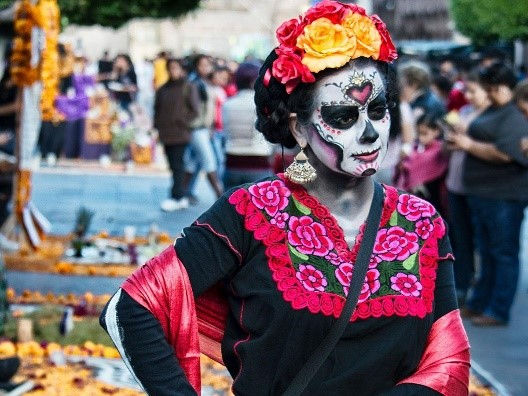
Día de Los Muertos comes with several traditions that are very important to the festival. One of those more well-known traditions is La Catrina (pictured above). These are a specific type of Calaveras (skulls) that resemble very well dressed wealthy women of the early 20th century. This became a prominent symbol for Día de Los Muertos after Diego Rivera, a famous Mexican painter, painted La Catrina into one of his murals called

“Dreams of a Sunday Afternoon in Alameda Park” (pictured left). Women paint their faces in colorful make-up and dress in these elegant outfits to represent the symbolic skeleton.
Another important tradition is the private Ofrendas (altars) which are created to honor loved ones who have passed. Families layout favorite foods and beverages, along with photos and memorabilia of the departed. These usually include orange Mexican marigolds, cempasúchil, sometimes called the Flor de Muerto (Flower of the Dead). This flower is meant to attract and guide the souls from the cemeteries to their families’ homes.
Sacred Celebration of Life
Día de Los Muertos is meant to represent a celebration of life and is sacred to those who celebrate. In the panteóns (cemeteries), celebrations are held that take on a more joyous and cheerful tone rather than a sad one. This holiday shows that the Mexican people choose to focus on the beauty of one’s life and the memories they created rather than on the grief that they feel.
Resources:
Comments